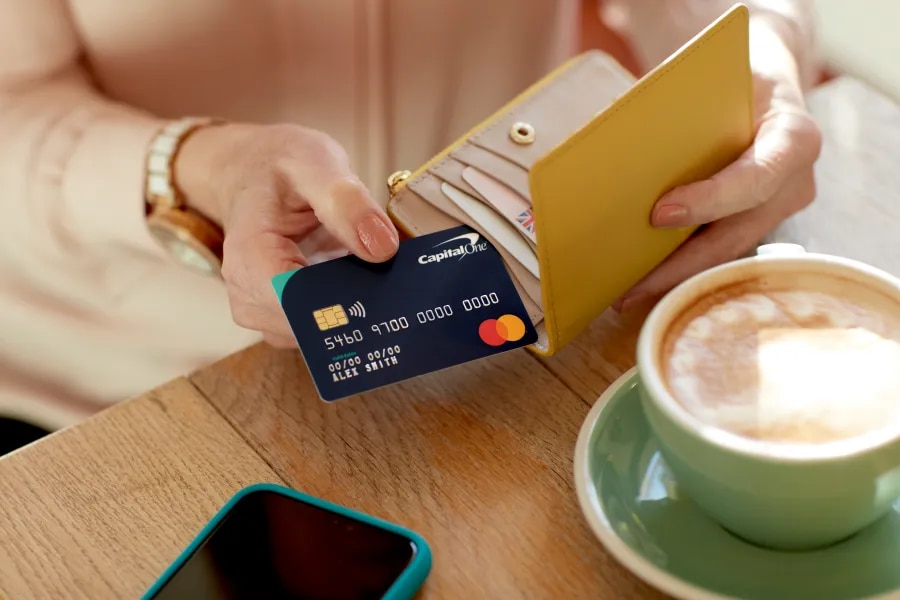
How to switch credit cards
13 min read
Life changes fast, and so can your finances. The credit card that was perfect for you a few years ago might not be the best fit for who you are today, meaning you're ready to make the switch. Whatever your reason, it's important to know how to switch credit cards and what to consider before you do.
Why switch credit cards?
Switching means moving from your current card and its specific features to a new product that better fits your needs. There are plenty of reasons you might be looking for a new credit card.
You might have used a balance transfer card to clear an old debt. Now that it's paid off, you might want a card designed for everyday spending instead. Or if you started with a credit-building card and managed it well, you might be ready for a higher limit or different features.
Switching could help you:
- Change your card type: Like moving from a balance transfer card to one built for purchases.
- Grab a new offer: This could be 0% interest on balance transfers or purchases for a set time.
If you've almost cleared an old debt, a card with a lower purchase rate might make more sense. Or if you're paying high interest elsewhere, switching to a 0% balance transfer offer could help you focus on paying back what you owe.
What are the benefits of changing credit cards?
Switching credit cards can be a smart move when it's done for the right reasons.
You could reduce the interest you pay
If you're paying a high interest rate, moving your balance to a card with a 0% introductory period could help you reduce costs for a while. This means more of your monthly payment goes toward clearing the balance itself, rather than just covering the interest.
Just remember to check the balance transfer fee and what the rate will be once the 0% period ends. Our Balance Transfer Card (opens in a new tab) could help you get on top of your existing debt and support your plan.
34.9% APR representative variable
You might find it easier to manage your money
Moving a few different balances onto one card can make things simpler. Instead of juggling various due dates and different rates, you'd have just one monthly payment to track. This makes budgeting easier, especially when you're balancing household bills and day-to-day spending.
You could spread the cost of larger purchases
If you're planning a bigger expense, like a new fridge or car repairs, you might find that there are cards with larger credit limits or 0% purchase cards that help spread those payments.
You can support your credit-building journey
If your credit history has had a few bumps in the past, switching to a card designed for rebuilding credit can help you show you're a responsible borrower. The Capital One Classic Card (opens in a new tab) is designed for people looking to improve their credit profile. By staying within your limit and making your payments promptly, it can strengthen your score over time. Just remember that failing to use it responsibly will negatively impact your score.
34.9% APR representative variable
What to consider before you switch
It can be tempting to just look at what the new card is offering. While rates and credit limits are important factors, a credit card switch should fit into your life and your budget. Before you apply, take a moment to look at the bigger picture:
How do you spend right now?
Start by taking a quick look at your habits:
- How much do you currently owe?
- Do you pay in full every month?
- What is the card for? Is it for emergencies or a big one-off purchase?
If you're moving a balance to clear debt, you'll need a realistic plan to pay it off before any 0% deal ends, or be comfortable with the rate after it does. If you always pay in full, the interest rate might not matter as much as other features or the credit limit.
Remember the balance transfer fee
Most 0% deals come with a one-off fee (opens in a new tab), which is usually a percentage of the amount you move. It's important to check the terms of your new card so you know how much this will be. Make sure you then add this to your total debt.
If, for example, you move £2,000 with a 3% fee, that's £60 added to your balance. Even with the fee, you may be likely to save money compared to staying on a high-interest card, but it's always worth checking the numbers first.
What credit limit do you actually need?
You can only transfer a balance that sits within the credit limit of the new card. In reality, when you move a balance, you can usually only transfer up to 90% of your new limit. So, if you want to move £3,000, you'll likely need a limit of at least £3,334. You won't know your exact limit until you've been approved, as it's based on your specific financial situation.
Can you comfortably afford the payments?
Even with a 0% offer, you still have to make at least your minimum payment every month. If you miss one, you could lose your 0% promotional rate, damage your credit score and be charged a late fee.
Check your budget. Make sure the new monthly payment fits alongside your bills and everyday costs. And set up a Direct Debit to make sure you don't miss any payments once you have switched. Check how to do this with your provider – it's easy to arrange this in the app (opens in a new tab) if you're moving to one of the Capital One cards.
Many lenders will remove promotional rates if you miss a payment, we don't do that and will honour the promotional rate for the duration of the term.
Will this card help you reach your goals?
Ask yourself what this switch will do for you. Is it clearing debt? Building your credit score? Is it simplifying your life by having everything in one place?
If a card doesn't help you reach those goals, it might not be the right one for you.
Remember that promotions come to an end
Introductory offers are there for a limited period. Make sure that you can do what you need to do during this time, whether that's paying down consolidated credit or paying off a big-ticket buy, before the standard rate kicks in (if this is affordable).
Be sure to check the end date for the promotional offer and the subsequent standard rate so you're prepared.
Check your eligibility first
Every time you make a credit application, it leaves a hard check on your file. This is when a company (in this case, your potential credit card provider) makes a full search of your report. They are recorded on your file and lenders will see that you've applied for credit.
A hard search can temporarily lower your score and several in a short space of time can have even more of a negative impact. To avoid this, use an eligibility tool first. Something like the Capital One QuickCheck tool gives you a straight yes or no before you apply. It’s completely free and doesn't affect your credit score, so you can shop for a card with total peace of mind.
Think about the timing
If you're applying for a mortgage, car finance or a personal loan, you're already triggering hard searches. Credit card switching adds another search into the mix, and this can cause lenders to query your credit management skills.
Lenders also like to see stable, well-managed accounts. Frequently opening and closing credit cards in a short period can raise questions.
You might also hold off switching if:
- You've recently missed payments and your credit score has dropped
- You're unsure you can meet the repayment terms of a new card
- The costs of switching (including fees) outweigh the likely benefits
In these cases, focusing on stabilising your current situation first could put you in a stronger position later.
How to switch from one credit card to another
When you switch cards, most of the process can be done online in just a few minutes. Here's how to make the move:
- Find the card that fits your life
Start by looking at what matters most to you right now. What are your financial goals? Once you find the card that matches what you're aiming for, check the current product in detail and also the 'after' price – look at the standard APR for when the intro offer ends.
Additionally, watch for fees. See if there's a cost to move your balance and remember that the credit limit you're offered depends on your own unique situation.
- Take a look at your credit report
Your report shows lenders how you've handled credit in the past, from your payment history to whether you're on the electoral roll. If your credit score isn't quite where you want it to be, you might choose to spend a few months tidying up your report before you hit 'apply'. From checking your address details are accurate to paying down small balances, it can all make a difference.
- Use an eligibility checker
Before you apply for a credit card switch, find out if you'd be accepted. Tools like QuickCheck (opens in a new tab) perform a soft search, giving you a yes or no without leaving a mark on your credit report or affecting your score.
- Make your application
You can usually apply online in as little as 10 minutes. You'll just need to tell the card provider a bit about your income, your address history and your monthly outgoings. If you're applying for a Capital One credit card (opens in a new tab), we'll give you a straight yes or no in 60 seconds before you apply. If you're accepted, your new card and credit agreement will head your way in the post.
- Activate your card in the app
When your card arrives, the quickest way to get started is through the app (opens in a new tab). It's the easiest way to see your balance, track your spending and stay on top of payments.
- Move your balance across
If you're switching to manage debt, you'll need to request a balance transfer. You can usually do this in the app or via your online account.
Make sure you keep making the minimum payments on your old card until you see the balance officially hit zero. It can take a week or two for the transfer to complete, and you don't want a late payment marker on your report during the switch.
- What's the plan for your old card?
Once the balance is gone, you have a choice:
- Keep it open: Having a longstanding, well-managed account can actually help your credit score.
- Close it: This could give you peace of mind but it can actually cause your credit score to drop. This is because it reduces your credit utilisation score (the percentage of your available credit that you’re actually using). Put simply, by not using all of the credit that is available to you, you're showing that you are more trustworthy.
How does switching credit cards affect my credit score?
Your credit score and credit report are both key factors in whether you'll be approved for the card you're switching to. Improving your score before you apply can help you maximise your chances of getting a good deal.
Your credit score is a number that represents how you've managed credit in the past. It's a quick indicator to lenders that you're a reliable borrower. If your score is healthy, it points to you keeping up with repayments.
You can learn more about credit scores and why they’re so important in this helpful guide (opens in a new tab).
Can I switch credit cards if I have an unpaid balance?
Yes, you can swap cards with an unpaid balance. For many people, this is the main reason to switch.
By using a balance transfer, you move what you owe from one card to another – usually one with a lower interest rate or a 0% introductory offer. This can give you some time to pay off your debt faster.
As long as you remember there's likely to be a one-off transfer fee and have a plan to clear the balance before the 0% offer ends, you're in a good place to move cards. And keep making your minimum payments on your old card until you're 100% sure the transfer has finished.
Can I switch credit cards with bad credit?
You can, but your options might look a little different. You might not be eligible for the longest 0% deals right now. Instead, you could look at a card to help build your credit score over time, like our Classic Card (opens in a new tab). By using it for your everyday spending and paying it off on time, you can prove to lenders that you're a reliable borrower, which could help improve your score for the future. Remember though, not using your card responsibly could hurt your credit score.
34.9% APR representative variable
Can I switch to a joint credit card?
In the UK, credit cards are almost always for individuals rather than joint accounts.
While you can't have a joint account in the traditional sense, you can usually add an additional cardholder. This lets a partner or family member have their own card, but it's important to remember that the main account holder is legally responsible for repaying the balance. If you're managing money as a couple, make sure you're both clear on who's making the payments.
Can I just make changes to my current card instead?
Switching providers isn't your only path. Sometimes, the best move is to stay put and see if you can switch credit cards with the same company. The main point to be aware of here is that if you're staying with the same provider, it's usually classed as a product change, rather than setting up a new account with a different provider.
You could ask your current provider for:
- A credit limit increase if you need more flexibility
- A different card
- Information on any offers for existing customers
Key questions to ask before you switch
Before you switch, ask yourself these key questions:
- Are you switching to save on interest, or is it time to graduate from a credit-builder card to something new?
- Are you sure this new card makes your financial life simpler, not more complicated?
- Have you taken a look at your latest credit report to make sure everything looks right?
- Have you used an eligibility tool before you apply?
- Are you clear on any balance transfer fees and what the rate will be once the 0% honeymoon period ends?
- Remember, you can usually only move about 90% of your new limit – does that cover what you need?
- Can you comfortably make at least the minimum payment every single month?
- If you're planning a big move soon (like a mortgage), is now the best time for a new application?
- Have you decided whether to keep your old account open to help your credit score, or close it for a fresh start?
Switch to a Capital One credit card today
If you're ready to switch cards, Capital One offers a choice of cards (opens in a new tab) that can help you build your credit or not have to pay interest for up to 18 months. When you're ready, use QuickCheck (opens in a new tab) to see if you're likely to be accepted.
Representative example: Assuming a credit limit of £1,200 and an interest rate on purchases of 34.94% p.a. variable, you will receive a 34.9% APR representative variable.